Monday, October 21, 2013

Just Pictures


This is the lazy man's post. It's just pictures.

In our old house (Munkácsy M. utca 26), with Kata, Kata, Kata, Gábor, Tibor, Lili and Zoé.


In Középrigóc with Péter, Julia and Zsóka.


In Pécs, with Dóri.


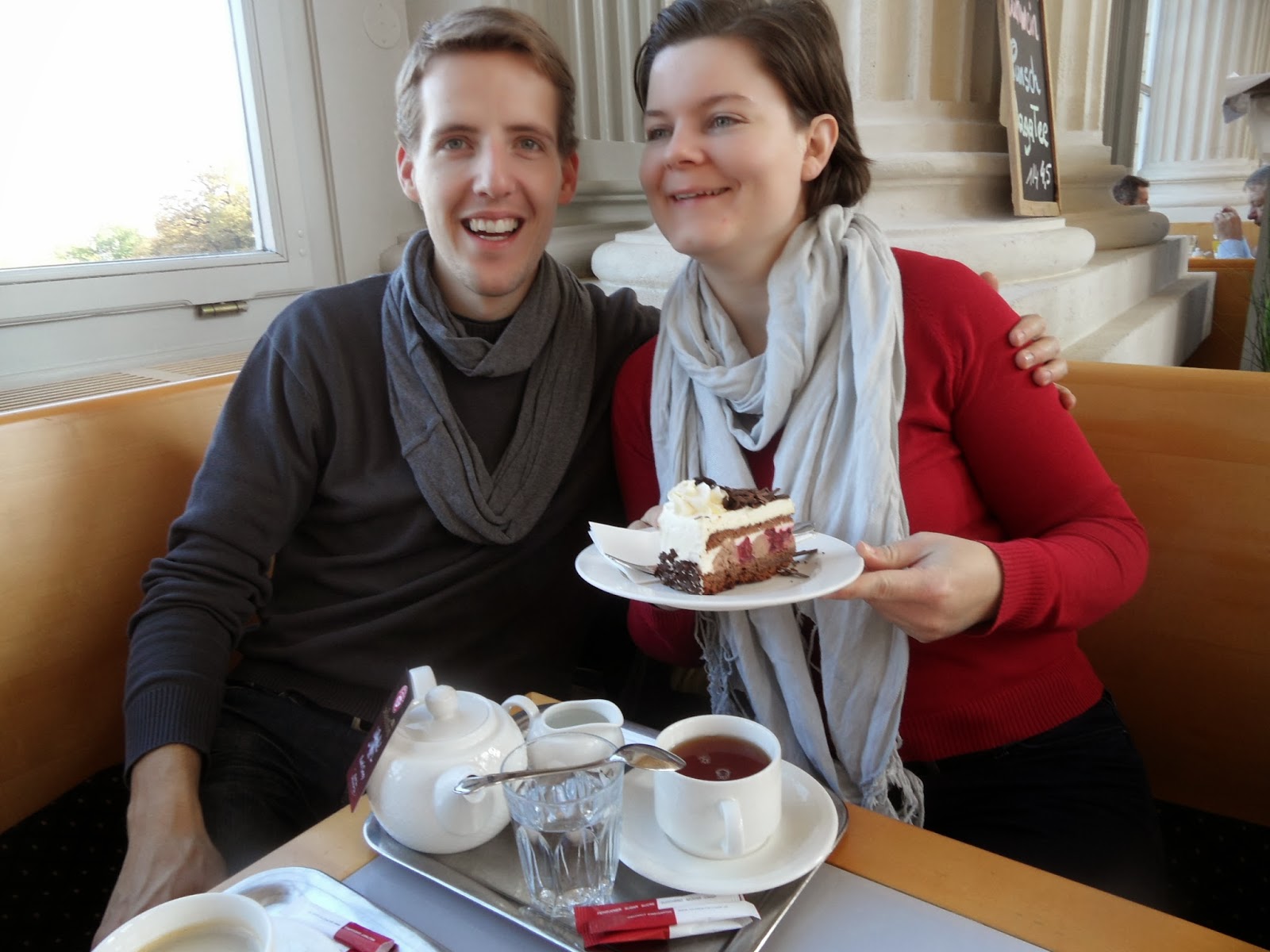
In Vienna, with Barna and Zsófi.


In Magyarlukafa, with artisans and Gábor.


The Roma

When I return to Hungary, I return also to a near universal unease between the Roma and Hungarians. I alluded to this in earlier posts during our year here, in an entry comparing Hungarian with American hopes and heroes, and more extensively in an entry about Martin Luther King.

The other day a group of little kids, 7, 8, maybe 9, approached me for a match. I said in English I didn't understand, and it was true, I really didn't understand how these little guys could be smoking, but I was also timidly hiding behind a language barrier: if I were to speak any kind of Hungarian, I ought to condemn their request, because if I were to answer their question directly--No, I don't have a match--I'd be condoning their behavior. In response to my unassailable English, the lead boy kept saying, Egy gyufát? Van gyufát? Gyufa! Gyufa!

Were I to tell this story to someone here, the first question would most likely be whether or not these were gypsy children, and then I would have to say yes, and then there'd be some variations in the resulting commentary, focusing on gypsies in Barcs, or the gypsy ways, or the sad cycles of poverty -- depending on the politics.

But I don't know what my story means either.

Yesterday, the Sunday New York Times printed an article entitled, "Are the Roma Primitive, or Just Poor?" It's the reason for this post.

Sunday, October 20, 2013

Veszíts el valamit naponta!


One Art
– Elizabeth Bishop          
 
The art of losing isn't hard to master;
so many things seem filled with the intent
to be lost that their loss is no disaster.
 
Lose something every day. Accept the fluster
of lost door keys, the hour badly spent.
The art of losing isn't hard to master.
 
Then practice losing farther, losing faster:
places, and names, and where it was you meant
to travel. None of these will bring disaster.
 
I lost my mother's watch. And look! my last, or
next-to-last, of three loved houses went.
The art of losing isn't hard to master.
 
I lost two cities, lovely ones. And, vaster,
some realms I owned, two rivers, a continent.
I miss them, but it wasn't a disaster.
 
—Even losing you (the joking voice, a gesture
I love) I shan't have lied.  It's evident
the art of losing's not too hard to master
though it may look like (Write it!) like disaster.

                Good morning everyone. It’s so wonderful to see you again. I didn’t know I could come back, so this is very happy. I have wanted to come back all the time, and my family too, so I told Fulbright, Give me money to come back, and I’ll teach some poetry at the school in Barcs. And Fulbright said, And what else? And I said, And I will also teach some writing exercises. And Fulbright said, And what else? And, I said, maybe my students will write poems for the Hungarian students? And Fulbright said, And what else? And, I said, maybe the Hungarian students will write poems to the American students. And Fulbright said, And what else? And so I said some other things. I don’t know what I said. I just wanted to come back and see you all and here I am. I am very happy to be back at Dráva Völgye.
                Today we will look at a poem by a very famous American poet, Elizabeth Bishop. It is called, “One Art,” and it’s about losing things. You know this word, losing? So let’s just see. What are some things you can lose. Yes, you can lose your mind. Yes, you can lose your life too. Whoa, this is very dark! You can lose your money—yes, I think it’s better than losing your mind, no? And what else? Yes, you can lose a boyfriend; it’s not so great. Which is worse—to lose your money or to lose your boyfriend? Yes, maybe so, and then you lose your mind! What else? Your clothes? Really? How do you do that? Maybe you’re looking for another boyfriend.
                So: You can lose money and you can lose your life. You can lose your mind and also lose your boyfriend. Anything else? Your keys! Yes, you can just lose your keys, and she, she’s losing her life! It’s better to be you, maybe. Okay, it’s a good list. You can lose many things: your keys, your clothes!, even your mind. You can also lose a game, yes? So it’s a different kind of losing, maybe. The opposite of losing a game is… Yes, winning a game. And the opposite of losing your keys is maybe finding your keys, so the meaning of the word “losing” is very big, but it’s never a very happy thing to lose something, yes? Ah, losing weight! It’s true: that’s a happy thing to lose, maybe. And then we shouldn’t find the weight again, I hope!
                So, we are about to read the poem by Elizabeth Bishop. We’ll read it four times—twice in Hungarian and twice in English, and hopefully after that we can think about what it means.
                So who will read this in Hungarian? I think it’s you. Wait! Slow slow slow! It’s a poem. We want to hear how the words come together. Okay: now. Thank you. And now? Someone in English. Yes, thank you. Before you start, there’s a word in the end, “gesture.” See that? It’s j—j—gesture, yes? Gesture. Okay: now. Wait, say this part too! This is important. Thank you. Now you’ve heard this poem once in Hungarian and once in English, and what maybe is the message? Yes, you can lose many things; and what happens if you do? That’s it. It’s not a disaster! You can lose something, and you will be okay, you will be just fine. So, who will read the Hungarian the second time? A boy, maybe. It’s you. Yes, you. You can do this. In Hungarian. And as we read this poem a second time, think: what do you notice? What is she losing? What are the sounds? Is anything said more than one time? So let’s see what we notice. Ready? Very nicely done. Thank you. And the last? Who will read this a final time, in English? Thank you.
                So now you’ll need a pen or pencil. You’re going to write, right there on the poem. You’ll take some notes. You have the Hungarian in front of you, and you have the English that maybe you don’t understand yet. I would like you to look, and try to figure out some of the English from the Hungarian words you have next to them, and write yourself some notes. I see, for example, this word “megtanulhatsz,” and I don’t know it, but I know tanul, and so I think, Maybe this word means “to master,” to learn something very well. Is this true? Okay, so then I write a note to myself on the Hungarian: to master. Yes? One problem. Maybe you know, a poem is not a book. And to translate a poem, it’s not the same thing as to translate a book. If you translate a poem, and the languages are very different, like Hungarian and English are very different, you must choose: am I going to translate the words so the words are the same, or am I going to try to keep the rhyme—you know what is rhyme?—Ah yes, of course, rím! And rhythm, what’s this? Ritmus. So, to translate a poem, I must choose: Do I keep the words or do I keep the rím and ritmus and change some of the words? So, you can try to figure out the words from the Hungarian, but it won’t be perfect, yes? But try. Take notes on words you can figure out, circle words you can’t and after you can ask me. And maybe see: what else do you notice. Okay? Take seven minutes. Take notes on what you can figure out and write down questions for me.
                That’s enough. Let’s see what we have. What questions do you have? Intent? Maybe you know “intention”? It’s what it wants to do. So maybe you lost your keys. It’s okay; they wanted to do this; they wanted to go, so you shouldn’t be upset. Have a nice life, keys! Fluster? It’s like this. Yes! Maybe you know the word frustrated? Or maybe annoyed. So, if you lose your keys, maybe you get a  little upset. But Elizabeth Bishop says, you can accept this; it’s not so bad. You can get a little upset. Accept the fluster, yes? What else? Ah, vaster. It’s a very strange word. You look up at the sky and it’s very big, so big, it’s va-a-a-ast. And the universe, it goes on and on. It’s vast. Almost infinite. Not infinite, but very big. And if I say “vaster,” it’s very strange. It’s infinite, but maybe more infinite. Infinite plus one. Infinite-er. Yes? Okay. And what else. “Shan’t.” It’s a word no one uses anymore, and it’s very complicated here. It’s conditional and it’s future. It’s should and it’s will together. And you see the translation? “Ez áll.” Maybe it’s this: It’s true, yes? Even if I lose you, even then I’ll be okay—this is still true. I didn’t lie when I said I’d be okay. Another? “Realms.” It means kingdoms. Maybe Elizabeth Bishop is a queen! We’ll look later.
                Now, what did you notice about the poem? This is a villanelle. It’s a French poem. And with a villanelle and many poems, there are many rules. It’s very hard to write with so many rules. This is sometimes part of the meaning of the poem. I want to do the right thing, or I want to write the poem the way I’m supposed to, and I try, but sometimes I just can’t. I have too many feelings. And a poem also, there are many rules, but sometimes a poet has too many feelings to follow the rules. So what can you guess about a villanelle from this poem? What maybe are its rules? Előírás, maybe: is it so? So what did you notice? Here are the five verses of three and here are four lines. What do you see in them? Yes, she says “master” many times. Here and here and then here and almost to the end. What else? Yes, this is the rhyme: aba aba aba aba aba abaa. And what else? Yes, disaster. It’s here and here and here and in the very end. This is very interesting, these two words. It’s master and it’s disaster. I’m in control! I am the master! I’m the boss! And this one: Run for your lives! It’s a disaster! So: I’m in control—I’m the boss!—and now, I’m out of control—Run for your lives! What else? You see that? Wow—yes, it’s 10 and sometimes 11. It’s the same rhythm as Shakespeare. It’s called in English iambic pentameter. You know penta, like péntek, the fifth day; and these iambs are like heart beats: ba Bum! ba Bum! ba Bum! ba Bum! ba Bum! The ART of LOSing ISn’t HARD to MAS… ter—oh, it’s another syllable. So maybe, it’s sometimes the master and sometimes disaster—maybe this makes sense, that the rhythm is not so perfect, sometimes 11 syllables, sometimes 10. Do you see anything else that is said over and over? Yes, it’s the whole line! In a perfect villanelle, the first line is repeated just like this, but also the third line too. We have repeated instead “no disaster,” but not the whole line. It’s not a perfect villanelle. The poem is not in control. Run for your lives!
                So now finally we are ready to look at the poem. So: The art of losing isn’t hard to master. Losing something is an art? What kind of art is this? You lose something, it’s not so good, yes? So how is it an art? And what’s this part: So many things seem filled with the intent to be lost that their loss is no disaster. I don’t know if they have this in Hungary, but in America, there is a monster. It’s name is a gremlin. And this is what it does. It goes into your dirty clothes and it steals one sock. Then it makes a hole in the ground and it buries the one sock. So then you wash your clothes and you go to put your socks together and—Where is my other sock? You look where your clothes are drying. It isn’t there. You look in the washing machine. It isn’t there. You look in your dirty clothes; it isn’t there either. It is nowhere! It doesn’t exist. It’s because the gremlin took it, and he put this in a hole in the ground and you will never see the sock again. So I think it’s like this: some things just want to be lost. Or maybe a gremlin took them. But you know what? It’s okay! It’s not a disaster. I learned a phrase yesterday. Is it this? Az élet megy tovább. Life goes on.
                But now what’s this: Lose something every day! Why should you do this? Maybe you should have this on your wall, to remind you! Veszíts naponta! Why is she telling herself this? You should lose something—every day lose something. Yes, perfect! Maybe just this: maybe it’s practicing for a big loss. And maybe it’s good to practice. If you ice skate—do you know ice skating? Maybe korcsolyázni. So, if you ice skate, you must learn to fall; otherwise, Boom!, maybe you break your face! Or your arms come out like this and, Shwhip!, your fingers come off! So it’s good to practice. You don’t want to fall but you can fall better or worse. And you don’t want to lose something, but you can lose better or worse: you can get very upset—Run for your lives!—or not. So, on your wall: Veszíts naponta!
                And the next? Accept the fluster of lost keys, the hour badly spent. Oh I just wasted an hour! I spent an hour listening to a teacher about a poem and now my time is gone! But it’s okay. You lost your keys, but, life goes on. You wasted an hour, but you’re okay. It’s not a disaster.
                So: practice wth a bigger loss now. Places and names. How do you lose a name? Yes, you forget. Maybe you go to a place and you love this place, and you feel very good friendship with many people, but then a few years later you come back and now: I don’t remember the names! I like the people very much, but which one of you is Vivi and which one of you is Évi? So maybe you forget some names, but it’s okay; it’s not a disaster.
                And the next. I lost my mother’s watch. Maybe the mother is also lost? And this—three loved houses went. How do you lose a house? Where did I put it? Where did my house go? Yes, maybe you move. And it’s not so easy. This is the window and every day I looked out the window and saw the wind in the leaves of my tree. And this is the corner where I sat to read and where the time was all for me. And this is the place where my little brother walked for the first time by himself. And this is the smell that is my family in this house. It’s not so easy to leave a house. But, Elizabeth Bishop says, I did this, and it wasn’t a disaster.
                I lost two cities. How do you lose a city? You move. I lived in Philadelphia, and Boston, and Cleveland. Yes, of course, and Barcs! And it’s not so easy to leave a place like Barcs, not for me. But maybe it’s not a disaster. But what does this mean? Some realms I owned, some kingdoms I owned. Was Elizabeth Bishop a queen maybe? What does this mean, she owned some kingdoms? Yes, I think you are right. It’s her world. This is the world around her and this is how she sees things, it’s her world. It’s her thoughts. And she lost this too.
                So we get bigger and bigger and bigger. She loses a key, but she’s okay. She loses some time, and she’s okay. Maybe she forgets some people, and it’s sad, but she’s okay. And she moves, and it’s still not a disaster; and even her mind changes, maybe she loses her mind, yes? And still, it’s not so terrible, life goes on; maybe she’s a little upset, but it’s not a disaster. And this is the feeling in the poem too, yes? It’s not so hard, it’s not so bad, life is okay, I am the master.
                But now we come to the last verse, and maybe there’s something new here. Take a look.
                Who’s the “you”? Yes, maybe the reader. Yes, maybe the husband, or a lover. Yes, it could be a friend also. I do think it’s one of these and not the others. Look. See that? It’s called a parenthesis. It means you don’t need the information but it’s just extra, yes? That’s why she didn’t even want to read this line, because it’s just extra. But look at what’s here: Even losing you—the joking voice—Oh-wa! Oh, your voice! Oh-wa! And your gesture, the way you touch your face, like this, oh-wa! So what do you think? Is the “you” the reader? Is it you? Is it her? Does Elizabeth Bishop love her voice? No, they just met today! It’s a little early to love like that, yes? So probably the you, it’s a husband or a boyfriend or lover.
                Now, what’s going on? Have they broken up, are they together? What do you think? Yes, probably they have broken up. And how does she feel about this? Yes! Yes! It’s a disaster! The whole poem she says it’s not a disaster, it’s no problem, life goes on, but it looks like she hasn’t gotten over her lover. Do you know this phrase, to get over someone? Yes, so she hasn’t.
                What are the clues in this poem that she hasn’t gotten over him? Oh, I don’t know how to explain “clues.” Does anyone know? Maybe keys. Kulcsok. What are keys to open this, how we know she is upset? Yes! This word disaster. Over and over she says, It’s not a disaster but she could say this without saying such a scary word. Instead, she uses this word, over and over. DISASTER! Disasterdisasterdisaster. What else tells us she hasn’t mastered the loss? Yes, the “I love.” That’s a pretty big clue. And. Take a look. There is something very strange in the last line. Yes! “Write it!” What is that? What is that doing there? Here is a poem about, Don’t worry, you’ll be okay, and then this? Come on, Elizabeth Bishop! GET IT. DOWN. ON. THE. PAPER. NOW. You. Will. Be. Just. Fine!
                So maybe she knows this. In her head, she knows this. Nyilvánvaló. It’s obvious. It’s evident. But her heart, it’s not so sure. Over and over, she says the art of losing isn’t hard to master and then in the last line, well, maybe not too hard, anyway. She still loves him. And losing him feels bigger than anything else. She feels like losing anything else, she would be okay. But in this poem where she sounds so okay, so fine, every “master” is followed by “disaster,” and the real meaning is there, inside the it’s-okay-it’s-okay. We hear the real truth only in the parentheses: I love! I’m lost!
                So you must practice: Veszíts naponta!
                Now, are you ready to write a poem?


A VESZTÉS MŰVÉSZETE (Rakovszky Zsuzsa fordítása)

Veszteni megtanulhatsz, nem nehéz:
oly sok az elveszni áhító tárgy,
elhagyhatod őket, s nincs semmi vész.

Veszíts naponta! Nagy bajnak ne nézz
elkallódott kulcsot, unalmas órát,
veszteni megtanulhatsz, nem nehéz.

Majd légy még nagystílűbb vesztő, s merész:
neveket veszíts, helyeket, ahol rád
öröm várna. Mindebből semmi vész.

Anyám óráját is, sőt - vége, kész,
oda egy híján három szép lakóház.
Veszteni megtanulhatsz, nem nehéz.
 
Elhagytam két szép várost, egy egész
kontinenst, minden országát, folyóját:
hiányzanak, de mégsincs semmi vész.
 
Még rád is (gunyoros hang, drága kéz-
mozdulatok) ez áll. Nyilvánvaló hát:
Veszthetsz nyugodtan bármit, semmi vész.
Ha úgy is érzed (írd le!), túl nehéz.
 

The student dorm


                The high school has generously provided me with a room in the student dorm, a double with two beds, two desks, two chairs, two wardrobes and even its own bathroom. I’m sure there’s much to discover throughout the building, like the gym and other places students documented for me a few years ago; but for now, I am happy to collect my key, walk through the student lounge and past the computer lab, and hole up. Sometimes I’ll come out and wait for a turn to play csocsó, or foosball, and this always generates a crowd. I don’t think it’s because my game is so fascinating; the big draw, I think, is this is easy way of being together, the common ground in the drama of a little ball, the laughter in familiar little phrases we try out in each other’s words.
                At or before 10 pm, electricity in the dorms is cut off. Door and bathroom lights are still available but nothing else until 6 or 6:30 am. It saves electricity but it’s also very effective at silencing the great thrum of student activity. It’s a big party until then, music, lolling, exactly what you’d expect. Afterwards, if anything’s going on, it’s sneaky goings on, and I don’t have anything I want to say about that.
                At 6:30 the next morning, there’s a long announcement in those calm, evenly paced notes one hears in Hungarian, followed by radio. And we’re up.


Breakfast


                When the girls were in school in Szulok and started classes early in the morning, they were often served a breakfast of bread and margarine and wieners. I forgot this and didn’t know what to expect when I arrived for student breakfasts. My first meal, I was given a slice of pepper and a bowl of türo (like cream cheese) to go with my bread, and a warm pitcher of sweet tea. I was awed by the towers of bread boys were taking back to the tables with them, 14, 15, 16 slices. The next day, cans of liver spread lined the shelf next to a basket of kifli, or crescent rolls. I was given a pitcher of warm cocoa too. The last breakfast I ate in the student canteen included a plate of pale wieners, a bowl of mustard, and zsemle, a roll. Boys were carefully slicing their hot dogs and making sandwiches for themselves, stacks of them, 6 or 7, some for now and some for later in the day. Maybe I didn’t know much about breakfast in my Hungarian year: in Seattle I eat cereal nearly every day and in Hungary, I ate muesli or corn flakes on the same schedule. Kriszta laid out hot dogs and ketchup and mustard, cheeses and jams and maybe some other things after my night at their house – much more than she usually prepares for just her and Péter – and it was then I remembered the children’s meals. This morning in Vienna, Zsófi filled every available space on the table with breakfast items I might enjoy: Swiss and Havarti cheeses and brie, her sour cherry and cloved strawberry jams, pâté and honey, cured deer meat and Pick salami from Szeged and ham, yoghurt, muesli and more.

Breakfast at Gábor and Kata's

Breakfast and Barna and Zsófi's
Breakfast in the canteen, rolls and deep plate of honey.
And below are some other meals, the top three in the student canteen for lunch, the middle Gundel-style palacsinta with Kata, the bottom two with Zsoka, in the forest (mushrooms and garlic).
 

Friday, October 18, 2013

March Back to Barcs!


                In Fulbright Teacher Exchange’s last gasps of opportunity before the funds entirely dry up this November, I requested a mini-grant to return to Hungary. I’ve yearned to travel back with Stephanie, Sophie, Amelia and Maisie to a town we’d come to love, but yearning is not earning – and so time and resources kept us where we were. After months hearing nothing from Fulbright about my grant, which was to fund a flight back to Hungary over the summer and to train teachers, via poetry, in Socratic teaching methods and creative writing – critical and imaginative thinking skills being less emphasized in Hungary – I received a note saying Fulbright was less interested in funding return visits, and wouldn’t I consider instead bringing students to the US? I added elements to my proposal until they finally said yes; and 25 hours from one door to the other, I arrived back at the house I once called our home.
                Being here in Hungary once again, seeing the light in the faces of beloved friends I didn’t count on seeing again, walking the halls of Dráva Völgye Középiskola with the awkward high alarm of being an oddity celebrity, finding in a burst of curious familiarity that hidden, indirect paths of Barcs remained to me obvious and unclosed, discovering that I could still draw from a language I thought had died in my head and that words unwrapped like candy as I heard them, all of this has lit me up. I have a giddy teenage energy at times, with matching sophomoric realizations: I walk down the street and think, There are fundamentally different ways of being in the world. And maybe I’m thinking this because sidewalks are made of asphalt instead of pavement, or because houses down one street are long and skinny. I don’t get the same giddy realization, though, from the better hints of cultural difference, like the prevalence of jowls, or the easy availability of a gift bag in stores.
                The very air puts me in a state of mind. Because we were well-tended guests for a year and even the bills we paid at the Posta were an interesting cultural experience, we were able to focus on the newness and the joy. So now a step outside steeps me in the smell and heaviness of air I only know from Barcs, a thick, ashen air even in the bright sun that smells not of the campfire but of the furnace. For me, as the town surrounds me and I even take it into my lungs, the pace of existence gorgeously slows and the day is an adventure once again.
                I sleep and exercise very little, and I eat or don’t eat and there is no hunger. I drink pálinka and feel neither light nor heavy. While the bags under my eyes tell me I haven’t slept, there are no signals or consequences yet because I am too happy charging from one moment to the next.
                And what have I said about my activities here? I’ve said nothing. Perhaps this is all introduction. I am writing in a notebook on a shaky train on my way to visit Barna and Zsófi in Vienna. Perhaps this means I will have time for details on the train ride back.

Sunday, September 29, 2013

Common Core and Text Simplicity


             I’ve been overtrained. This has resulted in bad decisions in the classroom.
             Some things I do as an English teacher are based on beliefs I’ve always had. I believe that intellectual conversation is genuinely energizing, and that the mind brightens as the distinct and minute shades of perception disclose themselves or resonate with sudden possibility. I believe that writing is more than a utilitarian skill one learns, but an act of meditation that likely alters one’s relationship with being-ness. I believe that the act—the physical act—of reading a book does a thing few other technologies or interactions do, which is disrupt the flow of our day, and meld our imaginations to our understandings—at the yielding and halting pace of thought. I believe that much of good writing can be taught, and that, just as the vivid and useful conjuring of a subject relies on specificity, so too does teaching writing rely on an instructor’s ability to describe and call forth the particulars of craft.
             Such beliefs, however, compete with professional training. There were two years when English department heads monthly skipped a day of teaching to go downtown and study newly minted national standards as we developed our own; then there were training days to which we returned as department leaders to unpack these standards once we, predictably, threw out our two years of work and formally adopted the Common Core; most recently, as one of the building’s “career ladder teachers,” I spent more time downtown where implications on our classrooms were weighed and spelled out.
             Yesterday was the day I realized I’d absorbed too much.
             In addition to the books we read as a class, our ninth graders choose and read a book independently; it’s an assignment that honors student interest and adjusts to individual levels, habits and experiences. But last year, as a result of meetings downtown, I added a requirement that insisted books be read at a student’s level, and that students engage active reading skills by annotating text or reflecting (not summarizing) along the way, and also that they gather and apply unfamiliar vocabulary. This year I further added themes for the more advanced readers: 19th century lit, prize winning books, modern lit (1900-1950), book group best bets, and banned books.
             I do like the added themes because students spent years in readers-writers’ workshops, where they were able to choose almost every book they read, emerging from middle school with a customer’s-always-right aversion to any book not automatically appealing; this level of choice cuts the leg off a gorgeous things books do—bring kids to new worlds, bring empathy and humility to the soul. Anyway, the 19th century isn’t as buttoned up as kids think. Novels were considered vulgar and escapest for years, and just like today, books were more often tales than literature, more development of plot than layered cake of meaning. So, boys afraid of leaving Percy Jackson could do worse than Ambrose Bierce, Jules Verne, Mark Twain, H.G. Wells, or Edgar Rice Burroughs’ Tarzan or Princess of Mars.
             Yesterday, I’d gathered a wonderful group of parents to come in on what amounts to every third Friday to provide book chats and tutoring to my ninth grade kids. This was our first event together. By the end I was personally exhausted, because my freshmen are habituated to class activities changing in 10 or 15 minute bursts, and on this day I’d asked them to stay quiet and read for most of the period; at the same time, noise was percolating all around the peripheries of the room where parents were holding book chats; furthermore, though we’d been to the library weeks before and I’d tasked kids repeatedly with starting their books, many were without or were just starting—only to discover they hated their books; and so I spent hour after hour tamping down unrest. This simmering energy wasn’t the problem, though. That’s just what happens with 14-15 year olds you tell to be quiet for an hour on a Friday. I’m just saying it was draining. I later fell asleep on a chair in my living room the way I always do on a Friday evening. No, what was different resulted from the brief conversation with four parents after the final bell rang after 6th period.
             “Are you up for some feedback?” one parent said. As the four debriefed their experiences, Anne described advice she’d been giving kids who’d found nothing to like in their 19th century literature. Break it up into chunks, she told them. Set small reading goals. Don’t bother with taking those notes until you’ve read at least 50, 60 or 70 pages. They need to get into it first, she was saying. They’re not familiar with the vocabulary or these places or times, and so I told them, she said, they should just wait with taking notes. Get a feel for the language and the story first. Anne strongly implied or outright declared that pairing annotation skills and independent reading of 19th century literature is the wrong way to start the high school experience.
             And, of course, she is right. So next year, I’ll delay the independent reading of 19th century books until later in the year.
             But she was right about a more important thing, a larger idea I needed to remember. Readers, and especially hesitant readers, should have the experience of being absorbed in a book; they need time to fall in and wonder, to feel; if required, they can stop and take a look around later, once they’re engaged.
             Didn’t I used to push for that? Don’t I want that now, as a teacher of reading? When did metacognitive reading strategies overtake the stirring of the imagination? What happened?
             I believe I was overtrained.
             Here’s some of what we’ve been learning from Common Core English Language Arts standards.
  • The goal of school is to get kids college and career ready.
  • School at the K-12 level has been way too easy.
  • There is a sizable gap in text complexity between what students are expected to read and use in college and in high school. Students are overwhelmed in college as a result. K-12 must therefore level up their text complexity.
  • Text complexity is associated with lexile scores, which is determined largely through vocabulary and sentence structure. Creative writing, poetry, narrative writing, short stories and novels do not have the text complexity that nonfiction has. In grades K-12, literature, narrative and creative writing has been overemphasized to students’ detriment in college and on the job.
  • Readers need to be exposed to reading material that challenges their reading level. To grow as readers, they must read material at the high end of their lexile band or higher. This will also help them develop strategies for difficult reading.
  • The most important teachable strategies for dealing with difficult material are close reading skills. Students need lots of work with close, active reading. This means lots of instruction and practice with annotation.
  • There are Common Core discussion and speaking standards but these will not be tested, so we will never speak of them again.
             I don’t like a purpose of schooling more interested in employers’ needs and employees’ income hopes than in the health of body, mind, spirit and community. But I agree that students can and should develop skills for working with difficult texts; I agree that annotation is a skill that yields direct benefits. And so, as I said, I have adjusted the independent reading assignment accordingly. Now kids are stepping out of familiar genres and cultures, as I’ve asked them to, and if they’re not overwhelmed by the vocabulary and florid prose of 19th century, they’re stunted by the annotation assignment, in which I’ve told them to avoid summarizing—the one note-taking act that helps track reading when confused. I’m doing nothing to help them enjoy their books; and in fact, students are in danger of slamming the door on an entire century of literature and more.
             And there’s the larger problem. While it has elements of inquiry and critical thinking, the Common Core is not interested in creativity, imagination, reflection, empathy, community, or civic engagement; yet it overwhelms the Language Arts classroom with its other needs. Literature and writing should be so much more.
             And in terms of text complexity, a piece so important that it bookends all the other standards because all the other standards rely on that text complexity, I’m starting to think it’s the most destructive standard of all.
             The reason I’ve asked more advanced readers to read from particular pools of books this year is because last year I discovered I couldn’t ask them to simply read “at their reading level.” According to the Measures of Academic Progress or MAP, and according to the way lexile scores work, many students are too advanced for novels. They need the challenge, apparently, of a book like Critique of Pure Reason instead. So, on the one hand, the idea that a 14 year old is too advanced for most novels is a hard thing for an English teacher to believe; on the other hand, it’s clear this is what the Common Core holds true—it’s the reason it wants this nation’s teachers to start de-emphasizing fiction.
             Here’s what this looks like. According to scores earned by my current ninth grade students during last year’s MAP, the average lexile score in one of my blocks is 1157—a number reached with 34% of the block officially designated as having special needs: registered English Language Learners, Special Education students, and kids on 504 plans. The 60 kids in my other block of ninth graders, meanwhile, average a 1327 lexile score. These scores suggest our students are right where kids should be, because, according to a Common Core appendix on text complexity, 9th and 10th graders should reach lexile scores of 1050-1335.
             If our kids are average or above average in their reading abilities, and if we are to honor the intent and requirement of the Common Core, what books are available to them?
             Here’s a sampling of books and their scores to help answer that question: Ernest Hemingway’s The Sun Also Rises has a lexile score of 610, and is, according to the premier lexile search site, appropriate for ages 3 and up. Charles Dickens’ Tale of Two Cities reaches the heights of 790, too easy, apparently, for all but a few. The Heights that Emily Bronte Wuthers, meanwhile, is 880. Virginia Woolf’s Mrs. Dalloway is 950. Pride and Prejudice is somewhere between 900 and 1100. Tolstoy’s War and Peace clocks in at 1240. How about some more recent classics? William Faulkner’s Sound and Fury and Toni Morrison’s Beloved are both scored 870. Ralph Ellison’s Invisible Man is 950. Or, from The Guardian’s list of the 10 books people are most likely to lie about having read: George Orwell’s number isn’t 1984, but 1090.
             This means one of my blocks could read and benefit from War and Peace, but everything else would be too easy. And it means my other block is way too advanced for Tolstoy and the rest of it. Let’s hope they read their Woolf, Faulkner or Ellison when they were apparently ready for it—in 4th and 5th grade.
             There’s a fundamental problem with calibrating what we do to what a computer can measure, and what we do, meanwhile, is build assessments and national goals and teacher evaluations and whole cloth curriculum. This is what we are doing. The pressures applied to principals, teachers and students in “testable” subjects like my own are shaped to an embarrassing extent by the algorithms of what a computer or a table of calibrated human scorers can measure. Consider what the Advanced Placement craze has done to writing: essays on the test are written in 35 minutes and by necessity reward formulaic writing like three-pronged theses leading to five paragraph essays. Schools end up teaching a lot of terse, formulaic writing. Then, when students are unprepared for college writing, the national solution has been to turn ever more to the most rigorous courses available—those guided by the College Board in more Advanced Placement courses. It’s a sickness.
             Even if Common Core standards aren’t supposed to be about a test (and we were told this summer to take the one released writing and reading test that heralds the assessment every 11th grader in the state will take next year and “backmap” it for its Common Core skills and then continue working backwards to create the scaffolded lessons leading up to it, until we have a coherent unit aligned to standards)—even if the Common Core standards aren’t supposed to be about a test or computers, I blame the index measured by computers for coming up with a narrow and destructive definition of text complexity, which, by numbers that measure diction and syntax but not irony or ambiguity, privileges nonfiction over fiction, by 70%—favoring a toilet installation manual with its unfamiliar vocabulary over Faulkner with its layers of race, class, accusation and forgiveness.
             I blame software and computer moguls who present themselves as philanthropists while we convert classrooms into labs in preparation for new computer adaptive testing; I blame our bean counting policy wonks for dictating what is important while we slide into ever more mechanistic relationships to each other and the world around us. And I blame myself for losing sight.
             I can teach the measurable skills and still make time for imagination, for inspiration, for creativity and conversation, but it’s also easy to lose sight, to get overtrained, to inadvertently push students into a lifelong antipathy towards an entire century of literature that absolutely dazzles when we make the time to ride it.
             Read Neil Gaiman's lecture on imagination for better thoughts on the subject.
             And Catholic scholars have written a stunning letter trying to keep Common Core standards out of Catholic schools with lines like this one: "Rather than explore the creativity of man, the great lessons of life, tragedy, love, good and evil, the rich textures of history that underlie great works of fiction, and the tales of self-sacrifice and mercy in the works of the great writers that have shaped our cultural literacy over the centuries, Common Core reduces reading to a servile activity." Amen.


Sunday, June 23, 2013

First Marathon

Yesterday I ran my first marathon. If you're reading this post, be prepared, because this is going to be a self-adoring entry. Why it is, given other grinding accomplishments in recent years, this one feels brighter, I don't know; but it does. Maybe because professional, parental or intellectual achievements require too much backstory, even in my own head, and this, it's just a long-ass run. Which I did.

I started running a few years ago because I needed exercise. Running is free and available anytime anywhere -- big advantages over a gym. I had two or three on-years interspersed with off years, during which time I never figured out if I enjoyed it. When I'm on, I wake up at 5:20, shave and brush, and am on the road by 5:35 for 35-45 minutes, before I come back and eat and read the paper before showering and leaving at 6:45 for work on my bike. This routine often means I'm not sleeping enough. But when I try running after work, the other thing happens, which is I don't want to. Because I think I might hate it. So running has been a dutiful routine, a trade I make with my body, and I've been able to do this thing by making the time for it before I'm awake enough to make any kind of choice.

Barcs might have been a great place to run in Hungary. The countryside was beautiful and there were dirt roads in every direction but south. But I was afraid of twisting an ankle and lying undiscovered in a muddy rut for a day or more. And while running through town, something I never saw anyone else doing, I received what I felt were shaming looks from stopped conversations and ubiquitous stares. By the time I returned to Seattle, I had 30 pounds to lose.

The first year back I ran sometimes, watched my weight a little, lost a few pounds. But the second year back, after a difficult year on a few levels, I made serious moves, including sticking to a regular routine and diet with the intention of losing all the extra weight. And because I tended to binge on weekends, I ended up trying to counteract this with longer runs, 12 miles even, on Sundays; and in December, I realized I was actually running a half-marathon: I wondered if maybe I could do something longer. So when a colleague at school talked about running the Rock 'n' Roll half-marathon, I signed up too -- but I quietly signed up for the full.

I didn't want to join a training group or read articles or guides and I never did. I read some websites that alarmed me by listing enormous distances, twice a week, leading up to training runs of 26 miles or 20; they burned my eyes so I had to look away, and at times I'd check back with these sites, but only quickly because the eye-burn set in quickly. The one thing I hung onto was that I should add miles without overtraining and taper down in the end. That was my guide.

I ran 15 miles in February at maybe 6.9 mph. I ran 16 in March at 7 mph. Then in the end of April, I thought for the first time maybe I really would be able to run a marathon by running 18 at 7.1. I hit my longest run at the end of May: 22 miles, on half a Clif bar and three water fountain stops. 6.7 miles per hour.

Below are photos from runs.

Foster Marsh Trail, Seattle
Myrtle Edwards Park, Seattle
Little Gunpowder Falls, Maryland:
park by Stephanie's childhood home
Little Gunpowder Falls, Maryland
Philadelphia
Carkeek Park, Seattle
I figured I could run a marathon after a 22 miler. The secret I guarded was that I didn't just want to finish. That's the line: "I'll be happy just to finish." My secret involved math, and the math said, if I could run 22 unsupported miles on half a Clif bar at 6.7 mph, then I could maybe run 26.2 cushy institutional miles at the same; and quietly, without even the articulation of thought, I whispered to myself, maybe 7. The math said if I averaged 6.7, I'd finish in 3 hours and 55 minutes. At 7.0, ten minutes faster. I wanted to run the marathon under four hours, and I was quietly hoping for 3:45.

Stephanie knew I was nervous, but she didn't know I was nervous because I wanted to beat a time, which meant drawing hard on a body's reserves without knowing the point I'd deplete them and face a disappointment I might be too embarrassed to share.

I was doing my training alone. And it meant on the day of the marathon, there were important elements I didn't know, like how to drink and how often and what, and how to pee, and, here's something not inconsequential I didn't know: whether to go fast or slow. I didn't know how to train for the run, didn't do training groups or partner runs, didn't know how to eat in preparation or what carbo-loading was supposed to look like. I was divided about running light or running energized, and ended up eating a pulled-pork sandwich and a plate of french fries instead.

I did get very consistent advice when I told people I was running my first marathon: they said to start a race by pacing myself, to hold myself back. Everyone said it. They told me
 that I'd be feeling good and strong in all the adrenaline of the moment and I'd want to go fast but should resist: a marathon is no sprint: I'd deplete my stores and hit the wall. 

I thought about this advice a lot, because it seemed right, and because I suspected it was advice my body wouldn't heed easily. I saw my body once in group run conditions, and even though I'm not a competitive person, even though I get distracted, for example, if I'm ahead in tennis until no one has to face losing but me, during the one casual group run I joined at Greenlake a few blocks from home, my body didn't want to wait when other runners were in its way. I found myself pushing a hard pace to run with the man in the lead (and asking his advice about marathons -- which was to take it easy); I finished alongside him at the very front and was totally wrecked the next day after just a 3 mile run. 

So I was nervous about the marathon, because I knew I had in me an urge to pass and get in front, even among serious endurance runners (who knew better); I didn't trust myself to tame the urge, to put down the itch everyone seemed to anticipate and mark with clear caution.

The morning of the race, I woke up early to clear my guts and went back to bed and waited for an hour. When my alarm went off, I stepped into my fancy runner pants and shorts and socks and shoes, 
lubed some band-aides and put them on my nipples, wrapped a sweat-head over my head and buttered myself in sunscreen, and I wondered what my body would do in the next few hours.

How would it respond in race conditions. How would it do after three hours. And would it try to lurch past people the way everyone told me not to let it.

And when the marathon came, I did end up passing people, like the cocky rookie I was, though I tried to stay steady; there were 20,000 people, 2,300 running the full; I was 8 waves from the start; I hate crowds. I knew I was supposed to take it easy but there were so many goddamn people. I didn't push but I didn't slow myself either. And then a funny thing happened. 

Nothing. I kept passing people.

I went into my head and listened to the playlist I'd prepared and it carried me on and on. Miles passed and so did I. Wendy met me mile after mile on her bike and cheered me on. 
I'd stop for water or Gatorade and jump straight back in, catching up and then moving beyond people who ran with their cups and threw them into the street.

In the end, I was 140th of 2,346 marathoners, 16th in my age group, coming in at 3:27:33 -- running at a pace for 26 miles I almost never matched in training, drinking the noxious Gatorade for the first time in my life, awkwardly ignoring almost all the advice everyone gave me.


I feel good. I ran a marathon. And it wasn't bad.


Thursday, June 13, 2013

Letter to David Guterson re: keynote speech

June 13, 2013
Dear David Guterson,

I wanted to find you after the ceremonies last night to let you know that you were heard. What I heard you saying was that we naturally pursue happiness but settle for amusements that feel like happiness and are aggressively sold as happiness when a deeper joy is quietly available to us—if we recognize these amusements as deliberate evasion, if we turn instead to unafraid thoughtfulness in naked contact with mortality and the world.

That’s what I heard you say.

The audience became agitated, as far as I could tell, when your message lingeringly spelled out the big things we had to fear—inevitable annihilation, polar ice caps melting, a likely creator willing to spare no child, saint or self from torment—and became further restive when you unblinkingly confronted the young audience with common and, given beloved supporters and generous regard on this night, embarrassing ways high schoolers already fled themselves—most notably, the number of seats filled by students repeatedly using marijuana. Perhaps the audience was right and you were reciting too much of our darkness for the occasion; but I also appreciated your willingness to treat graduates as adults and share with them honestly and bravely your largest questions and fears and our most entrenched dangers, with language that reflected real grappling and no mere platitudes.

Graduates of my philosophy class seemed to understand the layers of your speech. I know this because several of them found me and dropped a line or two that connected your speech with things they’d learned. Certainly hedonists provided related counsel on happiness. Epicurus said that “happiness is that which is under our control,” and that “it is not an unbroken succession of drinking, feasts and revelry […] that produces a sober life; it is sober reasoning” (Hicks, Stoic and Epicurean, 1925). We read passages as well by Jean Jacques Rousseau and John Stuart Mill who also assert that thought, instead of impulse fulfillment, is the path to happiness. J.S. Mill says that “pleasure of the intellect, of the feelings and imagination, and of moral sentiments [have] a much higher value as pleasures than those of mere sensation” because they are more permanent, and more importantly, because they fulfill our greatest capacities as human beings (The Basic Writings of John Stuart Mill, 242). Rousseau, meanwhile, distinguishes between duty and impulse, between appetite and justice, and says that “impulse of mere appetite is slavery”:

Although in this state, he is deprived of many advantages he derives from nature, he acquires equally great ones in return; his faculties are exercised and developed; his ideas are expanded; his feelings are ennobled; his whole soul is exalted to such a degree that, if the abuses of this new condition did not often degrade him below that from which he has emerged, he ought to bless without ceasing the happy moment that released him from it for ever, and transformed him from a stupid and ignorant animal into an intelligent being and a man. (Social Contract, chapter 8)

J.S. Mill sums up this idea famously: “It is better to be a human being dissatisfied than a pig satisfied.” So, when you spoke to the ways we distract ourselves, with texting and music stuffed in our ears, for example, and of the few rare moments left for real thought, you seemed to be speaking in this tradition. And when you spoke of the need to face mortality head on, you seemed to be speaking in the tradition of Arthur Schopenhauer, who says that our suffering brings us into sanctifying harmony with a universe indeed full of pain.

Such ideas, of necessity, are morbid and accusatory, but they were intended, as I understand them, to challenge students to break from a culture that esteems consumption and multitasking—a challenge onerous and sincere enough that you had to topple their complacency to get there.

Unfortunately, parents mostly heard the morbidity and accusation on a night when they hoped to celebrate achievements and wanted to make bright a luster of possibility. It’s true warnings can be welcome: the valedictory speech, for example, masterfully presented moral hazard as an inevitable partner of our dreams. Yet because of the urgency of your warning, you dwelt there longer than was welcome for these parents.

I was proud of our graduates, who, for the most part, did not join families in opposition but listened instead, and, indeed, worked to hear you.

Finally, I want to thank you, and to apologize, and to ask you for your own thoughts about the evening.

I am also enclosing my parting words to my Philosophy students, which includes a message I think you’ll find familiar.

Your colleague as a high-school-English-teaching-Mr.-G—

David Grosskopf
Roosevelt High School


January 29, 2013
Dear Philosophy and Literature students,

This is a farewell letter.

I wanted to repeat some of the things I have said in class.

The pressures of the life to which you’ve signed on will continue to have an irresistible rhythm. I know that you have felt their aggressive push from the onslaught of class assignments coming at you many ways at once, and from rebuilding over and over for unformed groups of students every five months, and from the impersonal, unassailable judgments of college entrance boards, and from your parents’ need for your safety and academic progress.

These pressures have undoubtedly forced a rhythm on you time and time again that prevent you from your healthiest states of being: when you can think with clarity and laugh -- and cry -- with ease, when you have time and sense to be compassionate and grateful, when imagination is engaged, when interactions electrify, and when your heart is big and easy, you are in a good place.

You’ll get into college or whatever and the pressures of high school will end, but new pressure will continually force the rhythm of your life. That’s just the way it is. You’ll have things to do by certain times, and you’ll be overwhelmed and you’ll cope. The feeling of anxiety and unease that has felt like something you just need to get through is going to come back, again and again.

I know you’ve seen adults that live this way much of the time. Television and alcohol fit very nicely into this rhythm, and that is part of what you’ve seen (and part of what I think you’ve already done).

But there are ways to take control of the rhythm of your life again. You have to deliberately slow down the pace. You have to put yourself in jagged relationship to the grinding path to which you default. Television and alcohol will do nothing to change this pace. But you already know and do many things that can. Travel, adventure, and exercise can shift your rhythm enough for you to reevaluate and readjust. Conversation with someone smart and unafraid. Inefficiencies can be good for you. Creative and expressive arts can put you back in mind. Any kind of art -- literature, painting, theater, music, etc., -- has the potential to alter perspective and change your pace. It’s the job of art to do so.

These things are enlivening and accessible; but taking control of the rhythm of your life will often require a conscious, deliberate step.

Thank you for the honor and privilege of being your teacher. I’ll miss you.

David Grosskopf